NextDemand vs Inventory Planner by Sage
Inventory Planner by Sage is built for retailers and brands that sell through ecommerce stores and marketplaces. NextDemand is built for distributors, importers and manufacturers that plan from their ERP, in Hebrew or English. This page compares them from public information, including where Inventory Planner is the better fit.
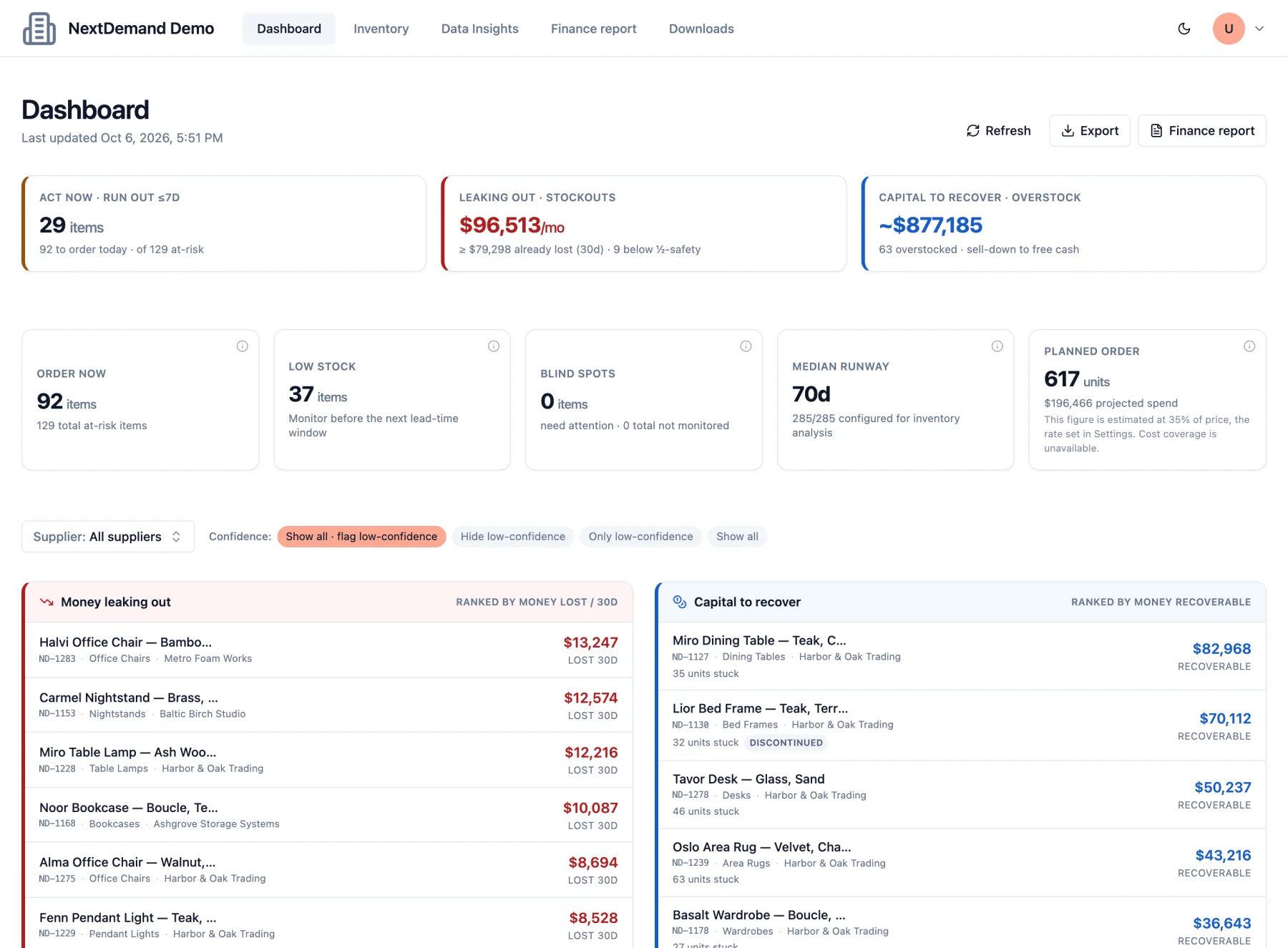
Side by side
| Inventory Planner | NextDemand | |
|---|---|---|
| Built for | Retailers and brands, including multichannel, multi-warehouse and wholesale, in apparel, beauty, sporting goods, furniture and jewelry. | Distributors, importers, retailers and manufacturers with many items and uneven demand, including spare parts. Built and supported in Israel. |
| Connections | Ecommerce-first: Shopify, Amazon, WooCommerce, BigCommerce, eBay, Walmart and others; ERPs including NetSuite, Dynamics 365, Brightpearl, Cin7, QuickBooks and Odoo; a CSV connector for other systems. SAP Business One and Priority are not listed. | Not built around ecommerce stores. Starts from an ERP export or CSV, including Priority and SAP Business One. A Priority connector is planned. Never writes to your ERP. |
| Forecasting | SKU-level forecasts with a configurable model per product, seasonal and non-seasonal; new products forecast from similar items; open-to-buy planning. | A method chosen for each item from its demand pattern, with forecast accuracy shown per item. |
| Slow movers | Overstock and dead-stock reports, including last-sold date and overstock units and cost. Intermittent-demand forecasting is not mentioned. | Every item is classified by its demand pattern; slow and sporadic items are forecast with methods built for intermittent demand, and low-confidence items are flagged. Overstock is ranked by the cash you can recover. |
| Hebrew | Not stated. | Fully bilingual, Hebrew and English, with right-to-left screens. |
| Pricing | Based on the volume of inventory managed; by quote, with unlimited users. | Quote-based, sized to your catalog and number of users. |
| Getting started | Implementation in 5–6 weeks with expert support and a dedicated account manager. | Live demo with no signup; a free diagnostic on up to 25 of your own items; start from one export. |
When Inventory Planner may be the better fit
- You sell mainly through Shopify, Amazon or other online stores and marketplaces, and want those channels connected directly.
- You plan seasonal collections and open-to-buy budgets, as fashion and lifestyle brands do.
- You launch new products often and want them forecast from similar items.
When NextDemand may be the better fit
- You are a B2B distributor, importer or manufacturer, and your sales live in an ERP such as Priority or SAP Business One.
- Much of your catalog sells slowly or irregularly, such as spare parts.
- Your team works in Hebrew.
- You want to see results on your own data before committing: the live demo needs no signup, and the free diagnostic runs on up to 25 items.
Inventory Planner facts come from Inventory Planner's public website, checked on 10 November 2026: inventory-planner.com · features · integrations · pricing. Products change; check with Inventory Planner for current details. Inventory Planner is a trademark of its owner. NextDemand is not affiliated with Inventory Planner.
Frequently asked questions
Does NextDemand connect to Shopify?
No. NextDemand works from ERP and CSV exports and is not built around ecommerce stores. Inventory Planner connects to Shopify and other stores directly.
Is NextDemand an Inventory Planner alternative for distributors?
For B2B distributors and importers that plan from an ERP, especially with many slow or irregular items, it can be. For ecommerce-led retailers and brands, Inventory Planner is built for that.
Does NextDemand work in Hebrew?
Yes. The whole product works in Hebrew and English, with right-to-left screens.
See it on your own items
Open the live demo, no signup, or book a 30-minute walkthrough on your own export.